
From the Founder
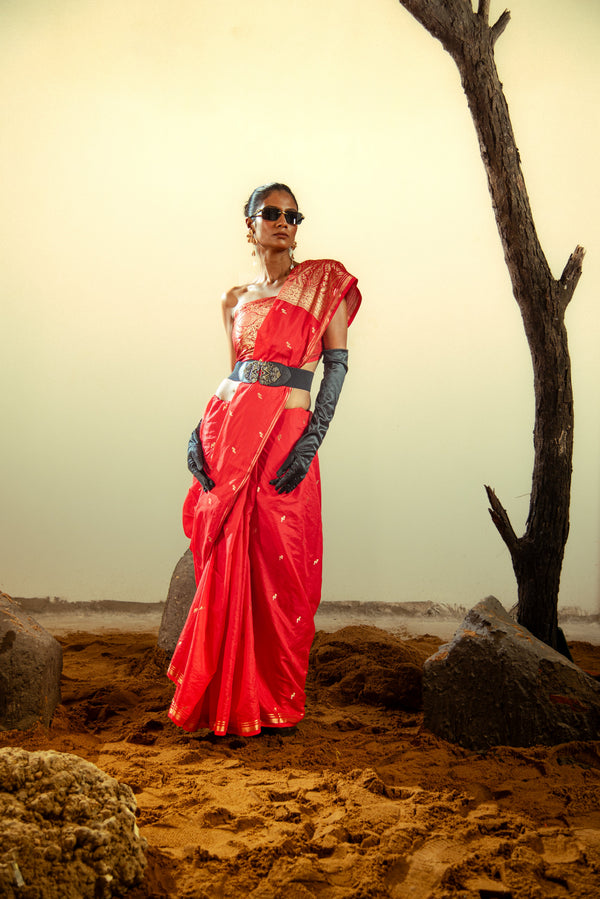
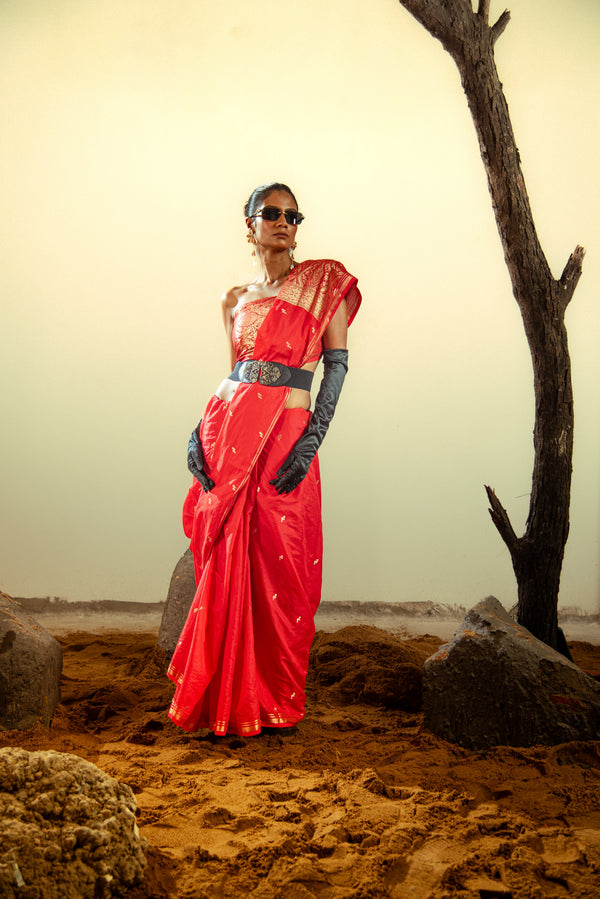
Silk in Banaras is older than the city's modern map. Long before the Mughals codified its motifs, weavers in Madanpura were already drawing thread through warp at three in the morning — when the air is cool enough that the silk does not stretch, and the zari, real silver dipped in gold, will not tarnish from the heat of a working palm.
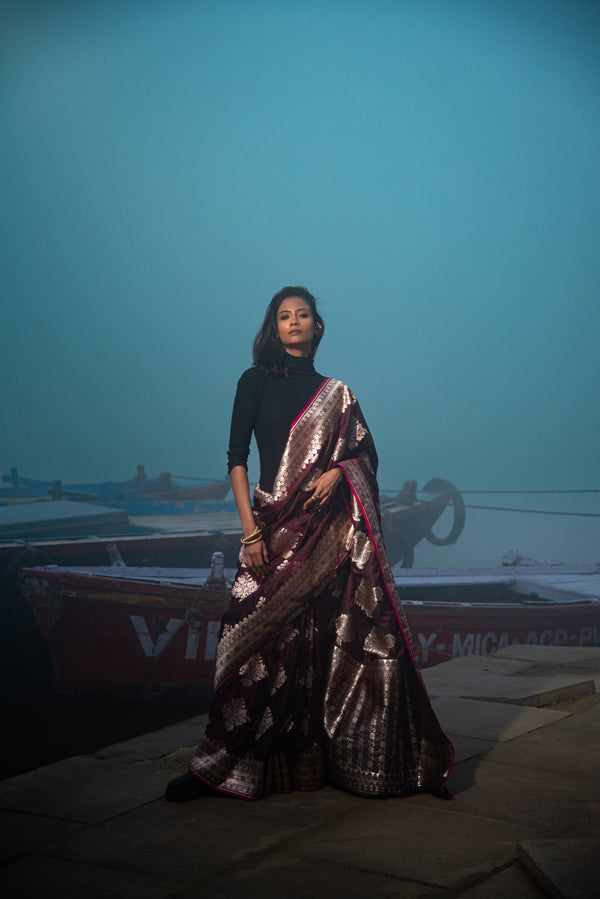
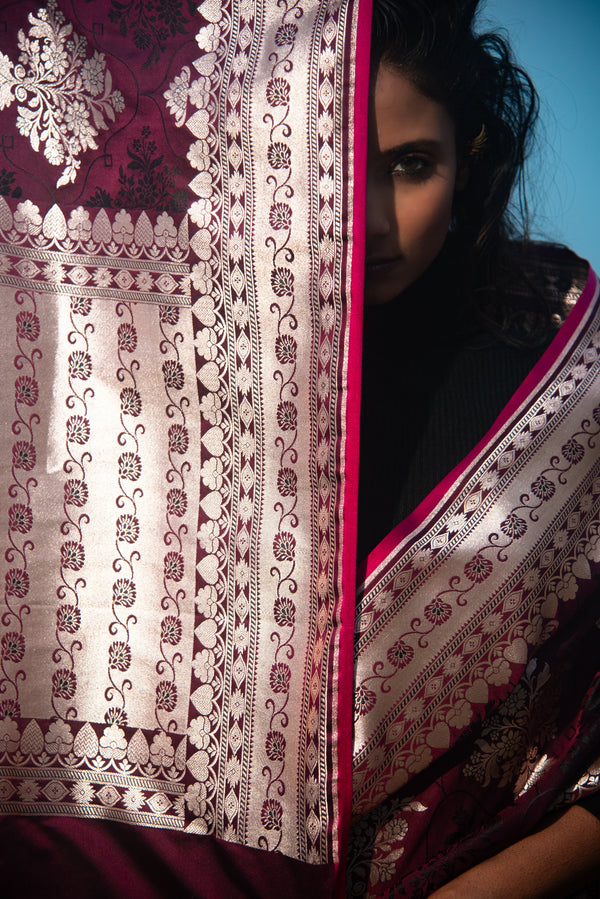
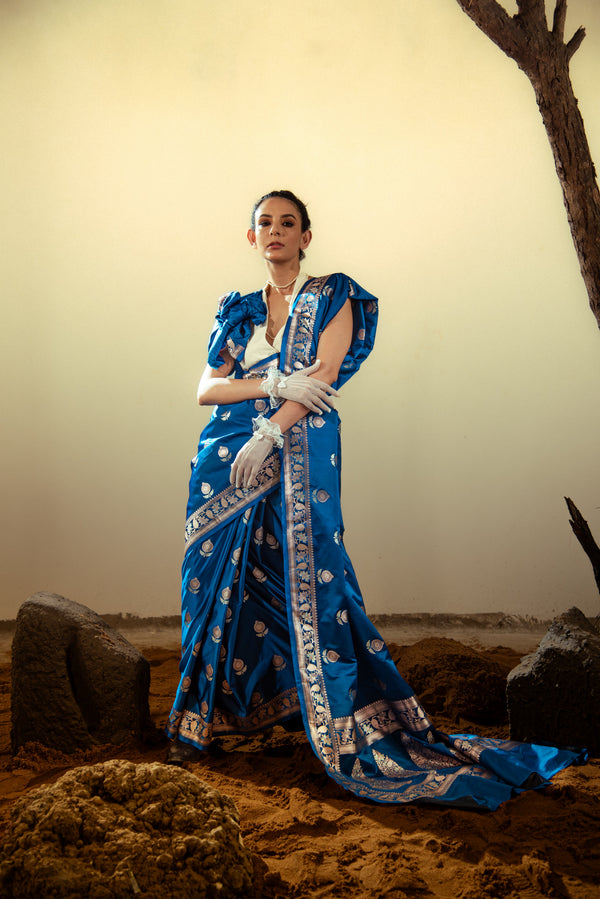
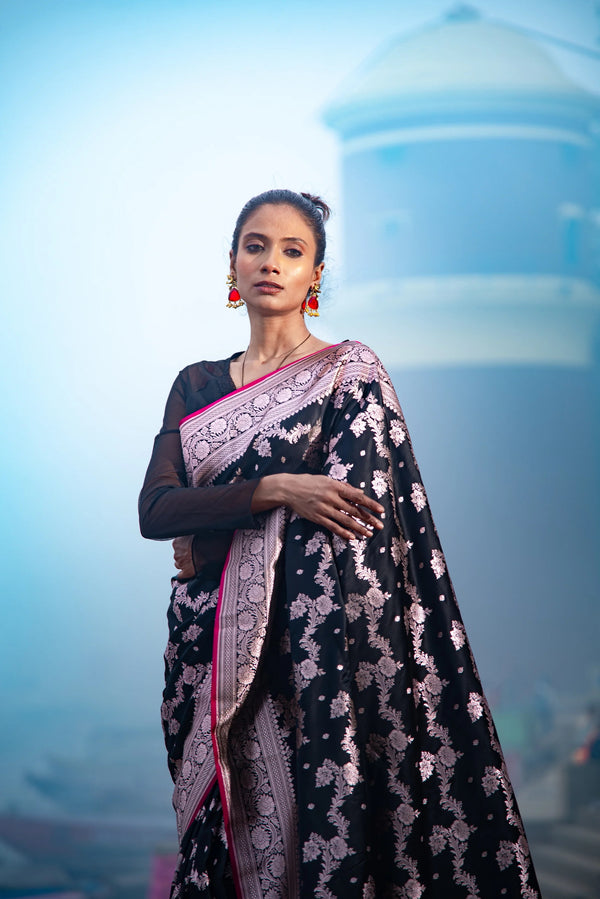
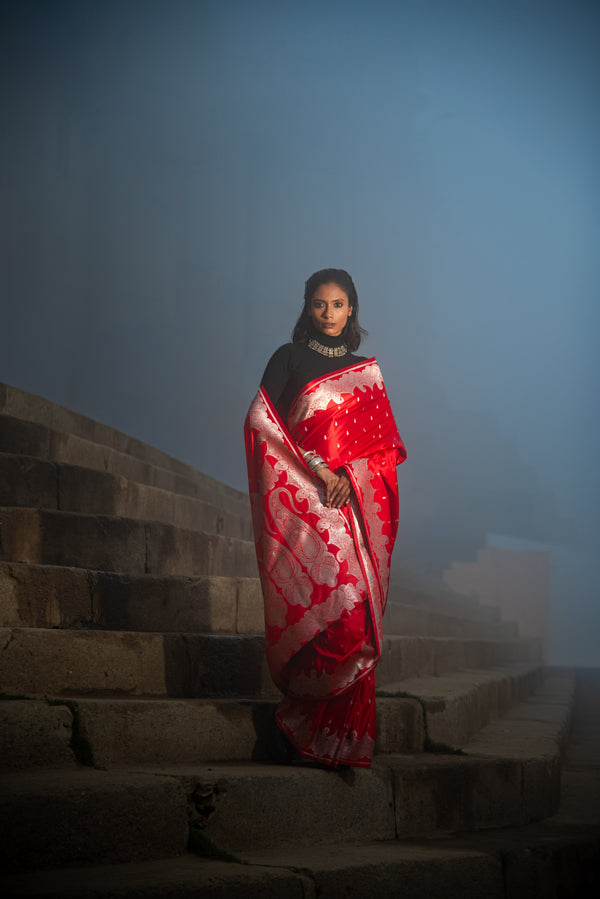
Every Katan silk here begins as two-ply, twisted yarn — the kind that catches light along the rib of the weave rather than reflecting it flat. We refuse art-silk substitutes. We refuse zari that is merely coated. The pieces in this room are kadhwa, woven motif by motif, the discontinuous brocade where each butti is its own small landscape, lifted and tied off by hand before the next is begun.
A standard kadhwa Katan saree takes between four hundred and twelve hundred hours on the loom, depending on the density of the work. There is no way to hurry it. There is no machine version of this. There is only the weaver — Mohammed-ji, Aslam bhai, Rizwan — and the silence of a courtyard in Madanpura, broken only by the soft strike of the comb.
What you are seeing is not fabric. It is time, made visible.





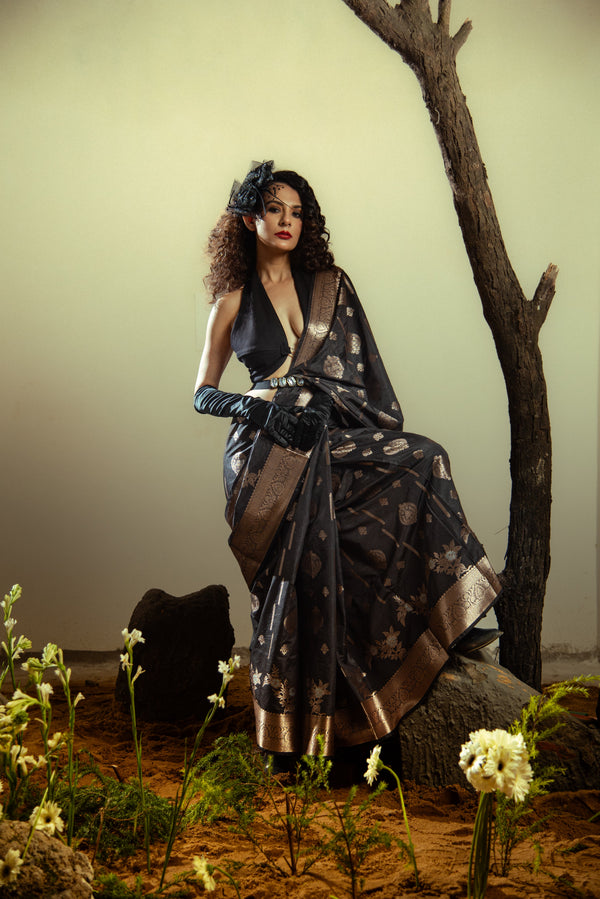
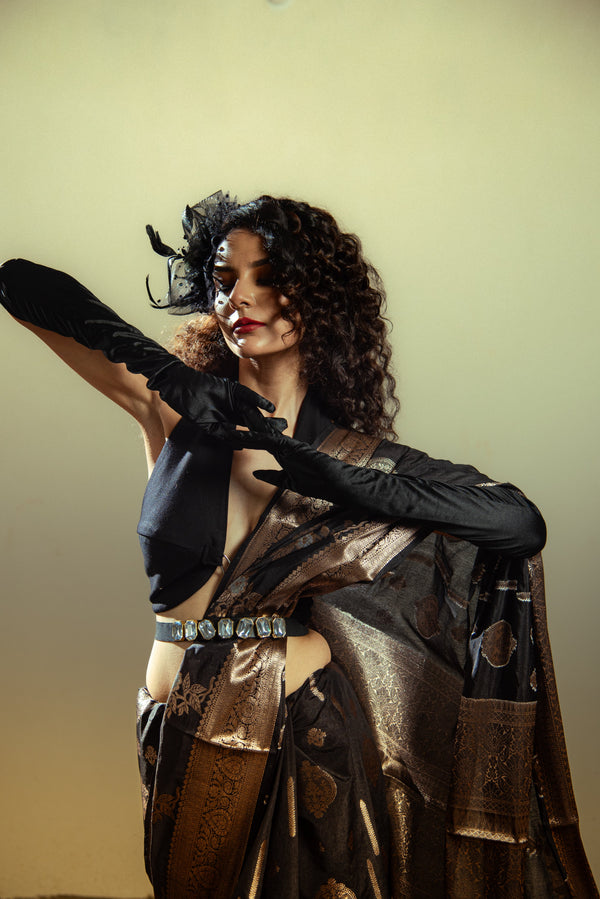


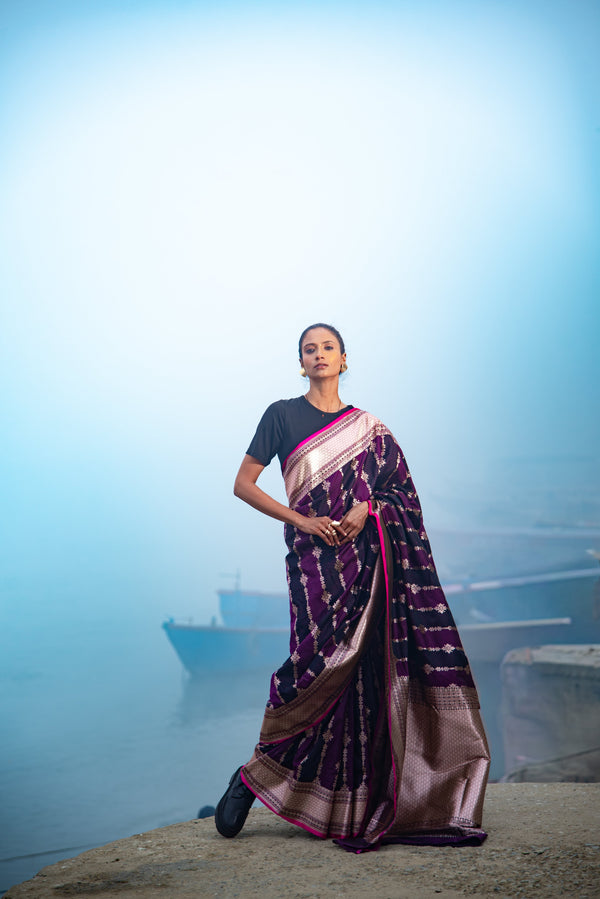
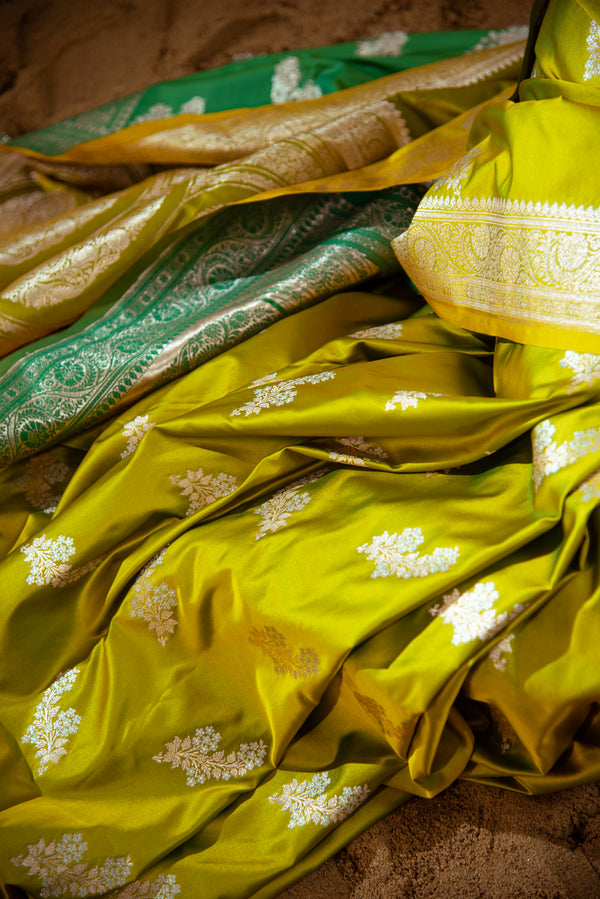




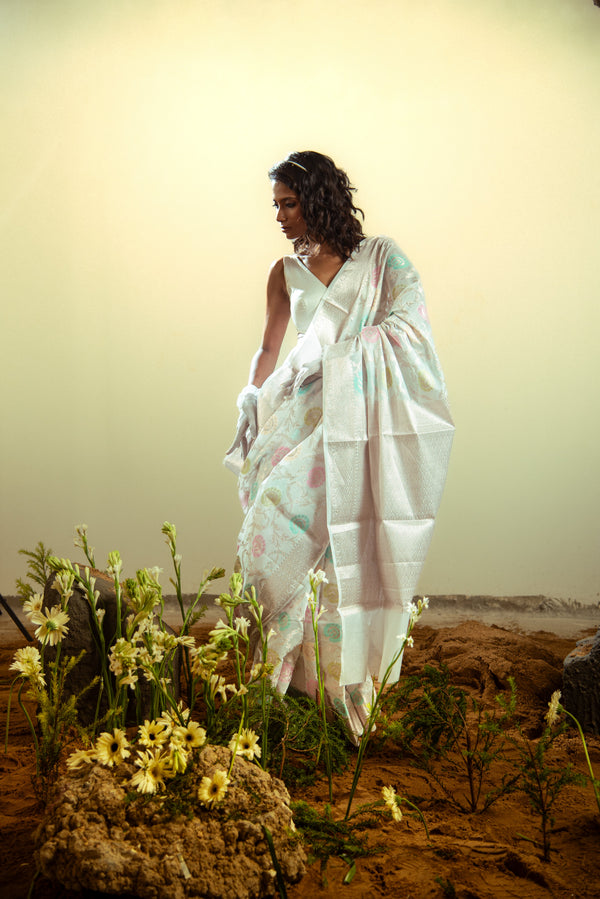

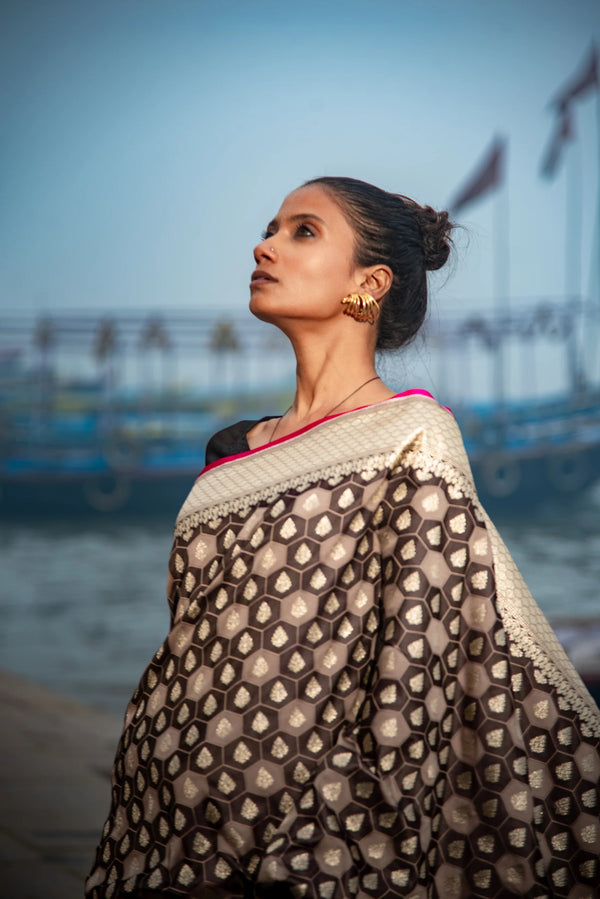
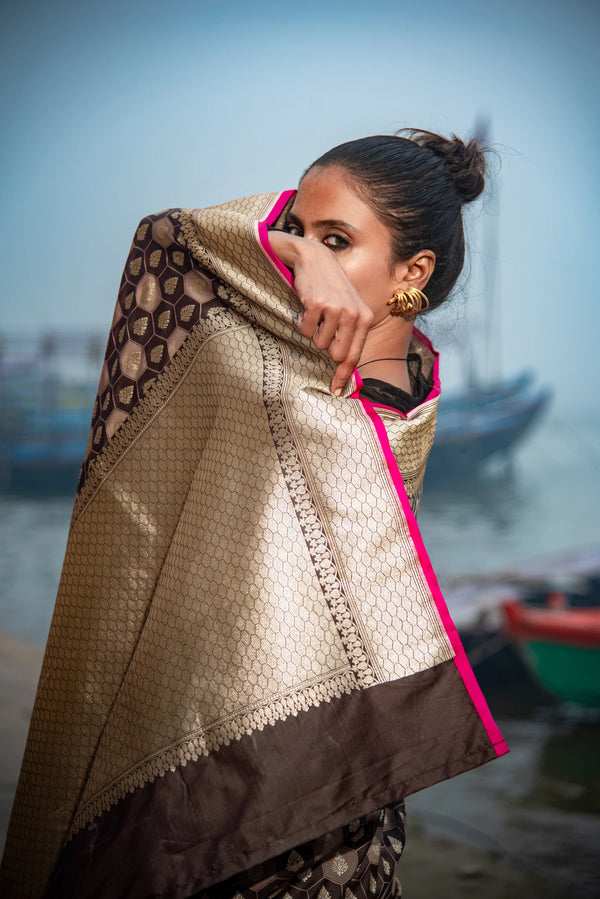
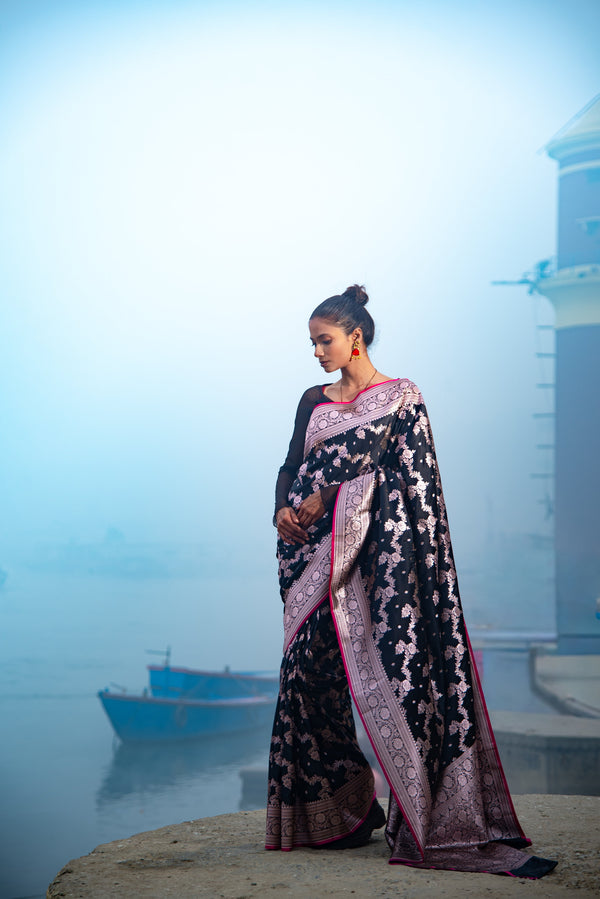


Know What You're Wearing
Three things every Danyah buyer should know before they fold this saree into a trousseau.
The Weave
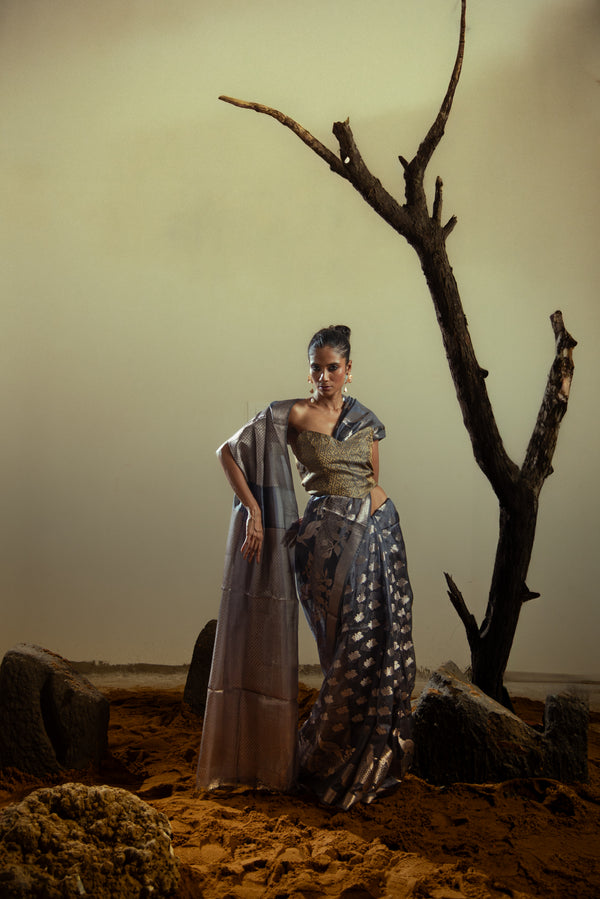
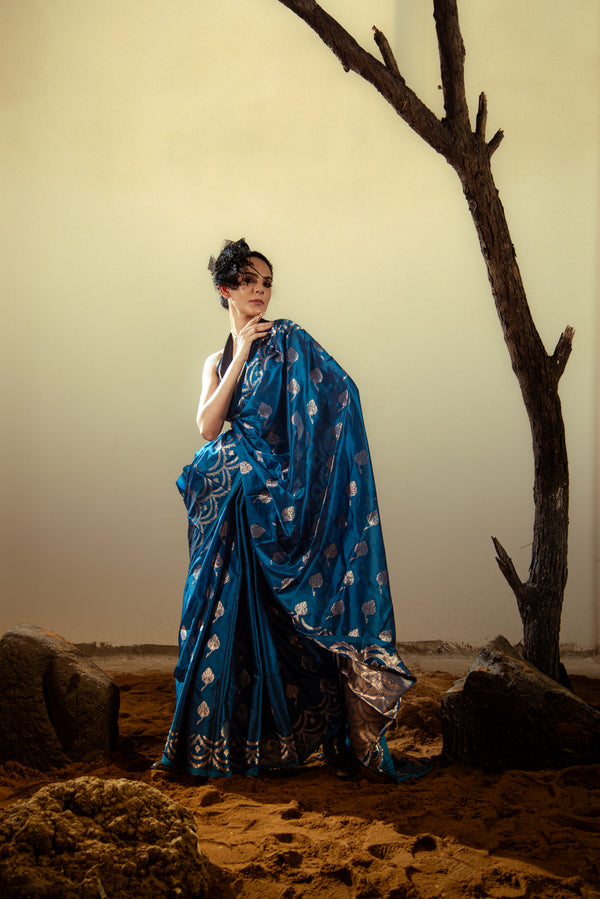
Katan refers to the two-ply, twisted silk yarn that forms the warp and weft of a true Banarasi. Twisting two single threads together — by hand, on a charkha — gives the yarn its characteristic strength and the woven cloth its faint, almost imperceptible rib, the surface that catches light along the body of the saree rather than reflecting it flat.
The silk itself is mulberry, sourced from Karnataka and Murshidabad and reeled into yarn in Bhagalpur and Banaras. It is then dyed in small lots — five to twelve sarees at a time — using acid dyes for jewel tones and natural dyes for our earth palette. Real Katan silk has weight in the hand, a cool initial touch that warms to the body, and a quiet rustle when the pallu falls. Art-silk substitutes are bright, slippery, and silent.
Authenticate
Care
Our Banarasi sarees are woven on traditional pit-looms in the bylanes of Madanpura, Varanasi — by master weavers whose families have been weaving for four to six generations. Each piece is hand-checked at our Mumbai atelier, finished, and paired with an authenticity certificate that lists the weaver's name, the loom number, and the exact silk and zari composition.
Whether you are shopping for a bridal Banarasi, a festive Katan silk, or a ready-to-wear pre-draped piece, every saree on Danyah Banaras carries the same promise: real silk, real zari, real craft.